
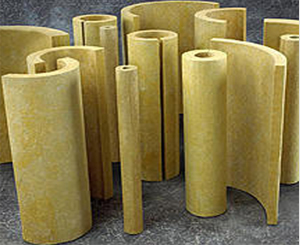
Industrial piping networks operating under severe thermal loads face an invisible threat: Corrosion Under Insulation (CUI). Implementing best practices during material specification and cladding installation is key to preventing system failure.
1. Understanding and Preventing CUI
CUI occurs when moisture enters the insulation layer and becomes trapped against the steel pipe wall, accelerating rust. Since rockwool is chemically inert, specifying low-chloride mineral wool (less than 10 ppm) minimizes chemical corrosion agents. Additionally, water-repellent (hydrophobic) rockwool additives prevent water accumulation within the fiber matrix.
2. High-Performance Cladding & Joint Sealing
The protective cladding jacket (aluminum or stainless steel) is the primary line of defense. Best practices dictate that cladding sheets overlap by at least 50mm, with joints oriented to shed water naturally (shed-water layout). High-temperature silicone sealants must be applied at all cladding penetrations, nozzle cutouts, and joints to form a weather-tight envelope.
3. Thermal Expansion Bands & Spacing
High-temperature steam lines expand and contract dynamically. Rigid cladding can buckle if expansion is not managed. Installing spring-loaded expansion bands at designated intervals allows outer cladding to shift slightly without breaking water-tight seals, preserving insulation integrity.