
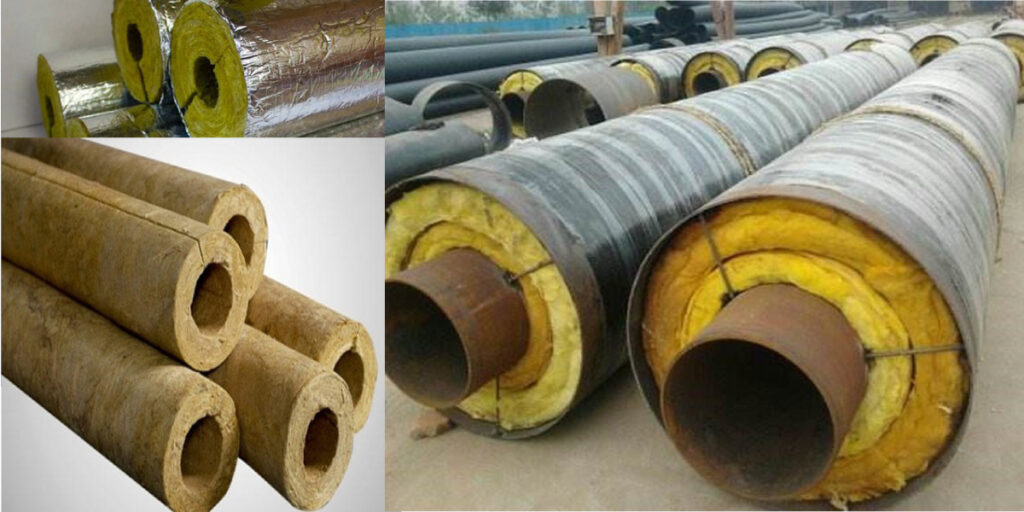
When selecting mineral fiber insulation for large-scale industrial projects or commercial roofing decks, consultants and EPC engineers typically choose between Rockwool (Stone Wool) and Glass Wool. Both are mineral fibers, but their raw materials and thermodynamic characteristics create significant differences in real-world application.
1. Temperature Limits & Thermal Stability
The primary distinction lies in heat resistance. Rockwool is made from natural basalt volcanic stone, melting at temperatures exceeding 1000°C. Glass wool, made from recycled glass melt, soft-fuses at around 550°C. This makes Rockwool the mandatory standard for high-temperature process steam pipelines, power boilers, and structural fire stopping.
2. Density & Acoustic Performance
Rockwool products can easily be cured to ultra-high densities (up to 160 kg/m3 or more), whereas glass wool typically maxes out at lower densities (up to 48 kg/m3). Higher density translates to superior acoustic transmission loss (STC ratings) and prevents compression/sagging under heavy structural loads.
3. Compressive Strength & Durability
Under repeated vibrations (like DMRC metro tunnel shafts or large industrial exhaust fans), low-density glass wool is prone to compaction and sliding, leaving uninsulated gaps. Rockwool slabs retain their dimensional layout and consistency over decades of mechanical movement.